Child Safety Week 2026 · 14–20 November
रुक जाओ वरना
पॉक्सो पकड़ लेगा!
Every child in India is protected under the POCSO Act. Understand the law, the acts it makes punishable offences and help spread POCSO Act awareness in your community.

What Is the POCSO Act? Full Form, Age Limit and Punishment
The Protection of Children from Sexual Offences (POCSO) Act, 2012, is a gender-neutral law in India that protects every child below 18 years of age from Child Sexual Abuse (CSA), both in person and online. It recognises different forms of sexual offences against children, prescribes strict punishments for offenders, and ensures child-friendly procedures throughout the legal process, from reporting and investigation to trial. The law places the safety, dignity, and well-being of children at the centre of every stage.

What Is Child Sexual Abuse?
Child Sexual Abuse is any sexual activity with a child by a person in power with the intention of sexual gratification and/or humiliation. It involves either explicit or implied force. CSA can happen either through contact sexual acts, which involve touching the child or through non-contact sexual behaviours.

Who Does the POCSO Act Protect? (Age Limit)
Under the POCSO Act, anyone below 18 years of age is a child, regardless of gender. The law protects every child from sexual offences. A child’s consent to sexual acts is not valid under the law. The responsibility always lies with the person who commits the offence, never with the child.

What Does the POCSO Act Cover?
The Act covers:
- Penetrative Sexual Assault: Any form of penetrative sexual contact (e.g. penetrating Private Parts/body parts like fingers or other objects in the child’s Private Parts and/or mouth)
- Non-Penetrative Sexual Assault: Physical sexual contact without penetration (e.g. touching/fondling a child’s Private Parts or any other body parts with sexual intent)
- Sexual Harassment: Non-contact sexual behaviours (e.g. showing Private Parts and/or asking the child to show their Private Parts, online sexual abuse)
- Child Sexual Exploitative Abuse Material (CSEAM): Creation, sharing, or possession of child sexual abuse content

POCSO Act Punishment: What the Law Says
Legal punishments vary for each sexual offence committed. For example,
- Penetrative Sexual Assault: Imprisonment of minimum 10 years, extendable to life, plus fine. If the child is below 16 years, minimum 20 years, extendable to life, plus fine.
- Aggravated Penetrative Sexual Assault: Rigorous imprisonment of minimum 20 years, extendable to imprisonment for the rest of the offender’s natural life, or death penalty, plus fine.
- Non-Penetrative Sexual Assault: Imprisonment of 3 to 5 years, plus fine.
- Sexual Harassment: Imprisonment up to 3 years, plus fine.
- CSEAM: creating/using a child for CSEAM: minimum 5 years imprisonment, plus fine; minimum 7 years for a second or subsequent conviction · storing or possessing CSEAM with intent to share, without deleting or reporting it: fine of minimum ₹5,000; minimum ₹10,000 for a repeat offence · storing or possessing for transmission, distribution, or display: up to 3 years imprisonment, or fine, or both · storing or possessing for commercial purposes: 3 to 5 years imprisonment, or fine, or both, on first conviction; 5 to 7 years imprisonment plus fine, mandatorily, on a second or subsequent conviction
Child Sexual Abuse in India: Why POCSO Act Awareness Matters
Child Sexual Abuse (CSA) often goes unreported due to fear, shame, social stigma, and the silence surrounding the issue. Many children find it difficult to speak about their experiences, especially when the person responsible is someone they know or trust. A lack of awareness among adults about the different forms of Child Sexual Abuse and the POCSO Act further prevents children from receiving the protection and support they need. Every adult has a responsibility to recognise the warning signs, take action, and help keep children safe. The following statistics highlight why greater awareness and action are urgently needed.
 199
Cases of Child Sexual Abuse (CSA) are registered in India every day
 97%
Of the POCSO cases, the offender is known to the child
 72,697
Cases of sexual crimes against children reported in 2024, up from 71,641 in 2023
Section 7 · Non-penetrative Sexual Assault
Touching a child inappropriately is punishable under Section 7 of the POCSO Act (Non-penetrative Sexual Assault). In 2024, 20845 total cases were registered under this section.
Note: This is the total number of cases filed under Section 7, not only this one situation.
Section 11 · Sexual Harassment
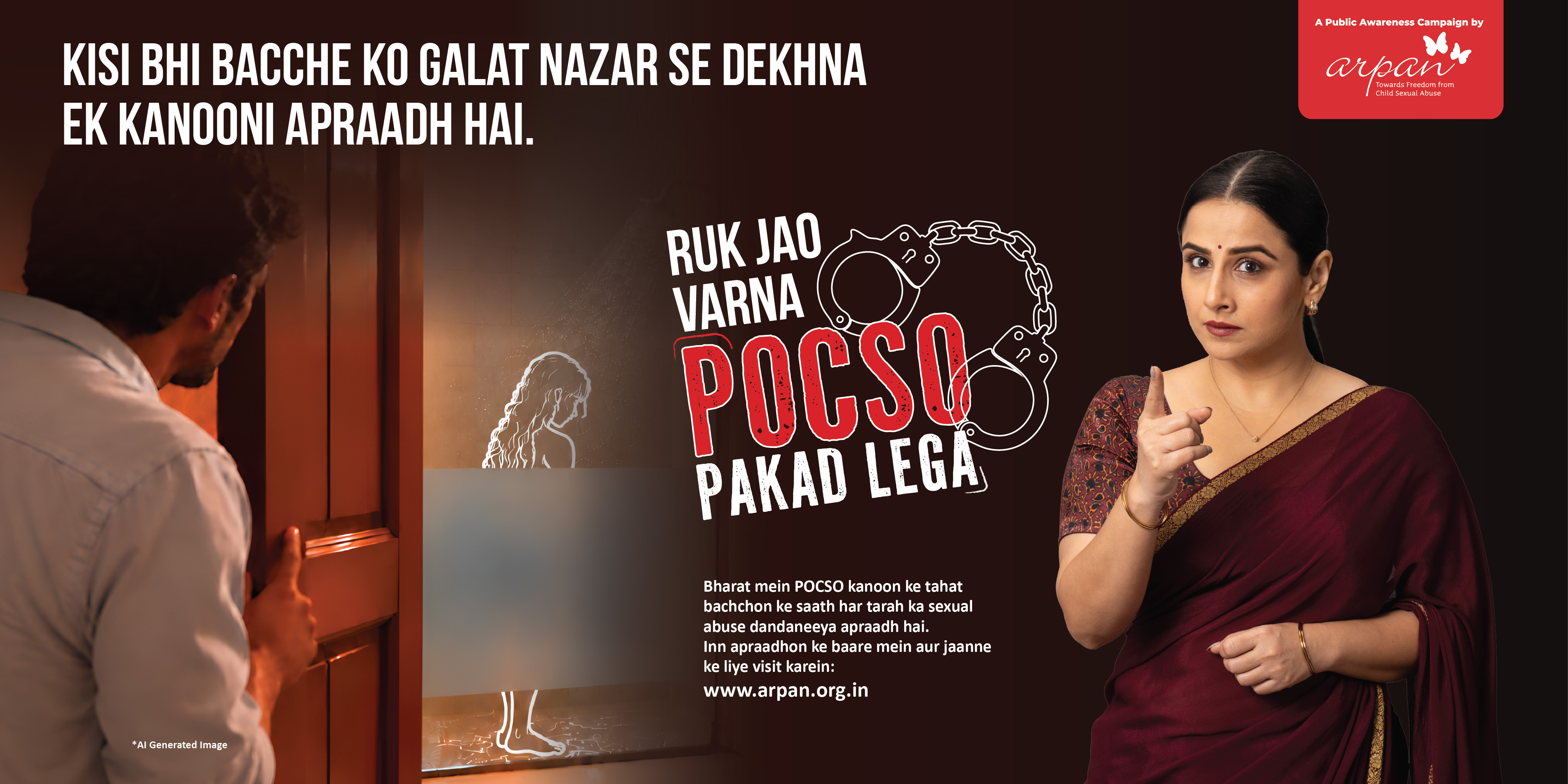
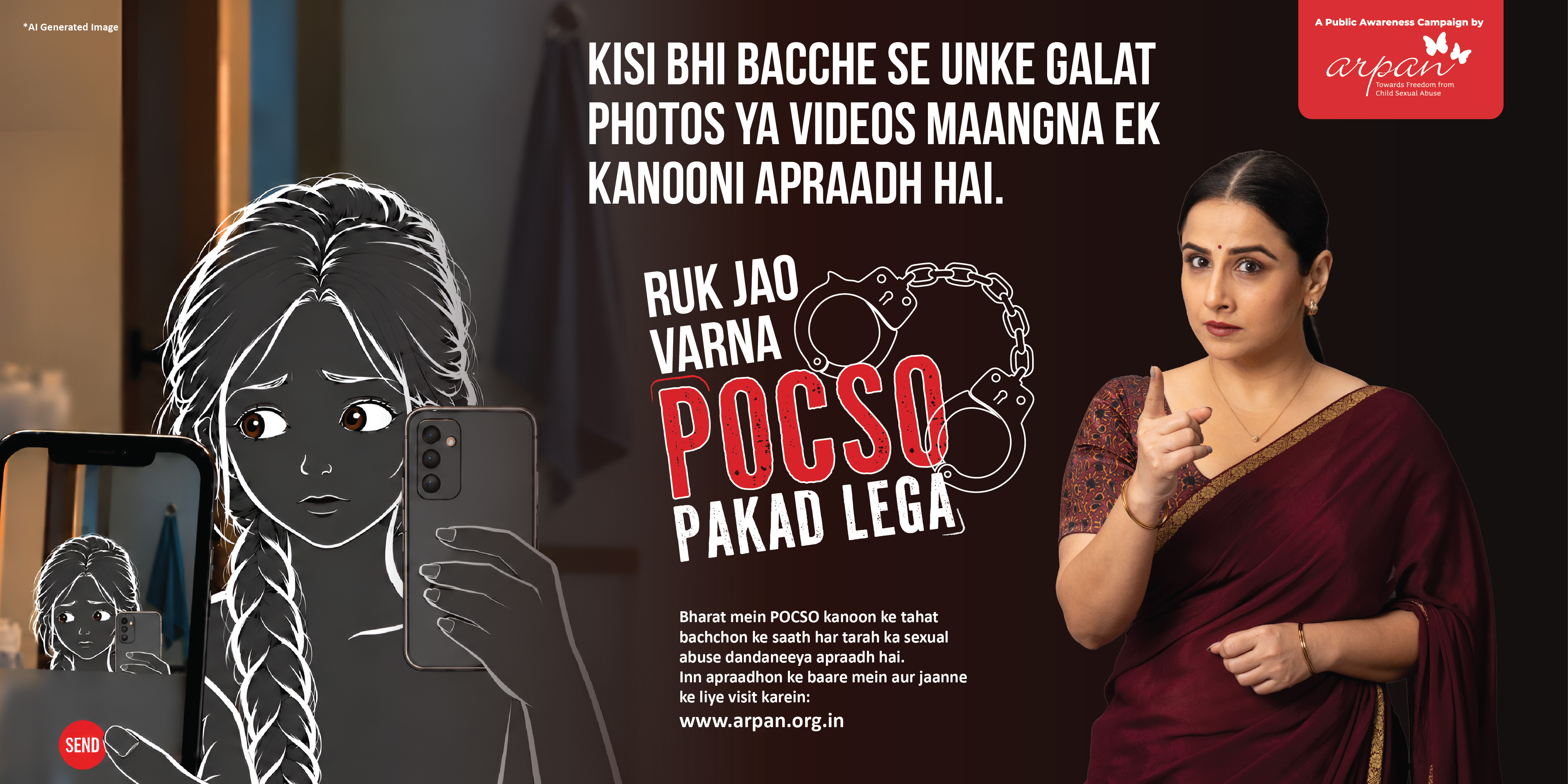
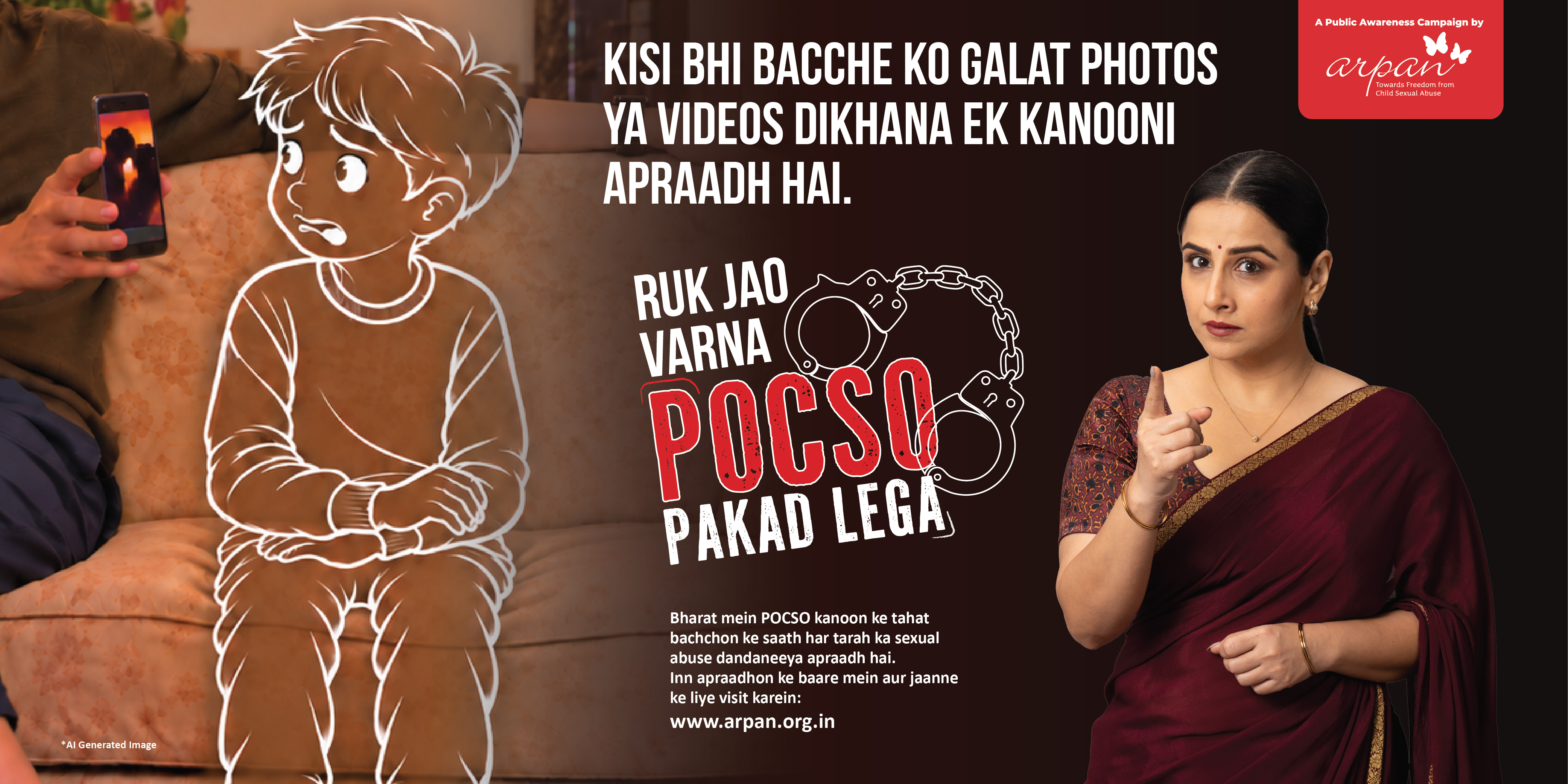
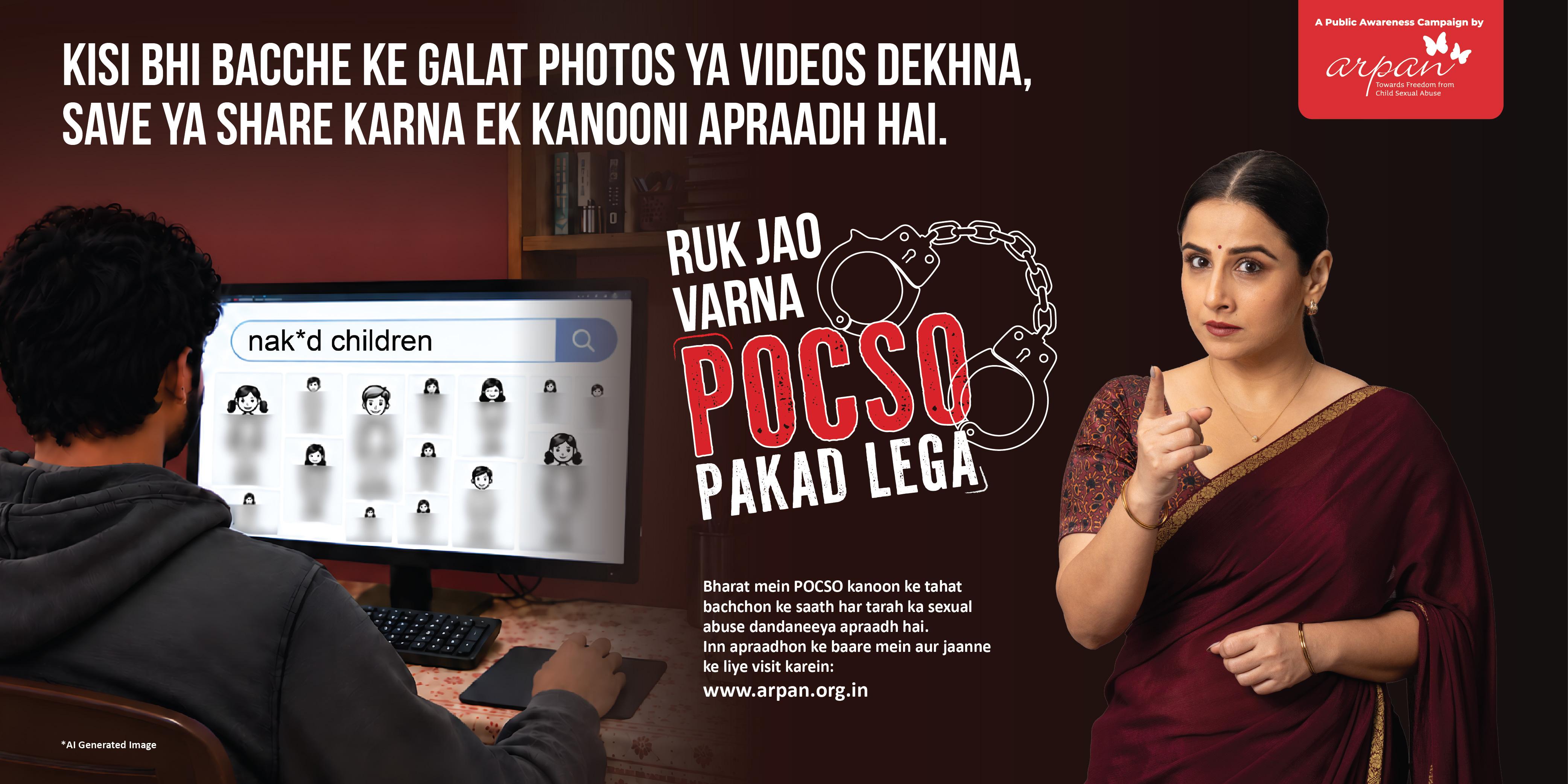
Looking at a child’s Private Parts or body with sexual intent; Asking a child for inappropriate photos or videos; Showing a child inappropriate photos or videos are actions that are punishable under Section 11 of the POCSO Act (Sexual Harassment). In 2024, 3502 total cases were registered under this section.
Note: This is the total number of cases filed under Section 11, not only these situations.
Section 13 · Child Sexual Exploitative Abuse Material
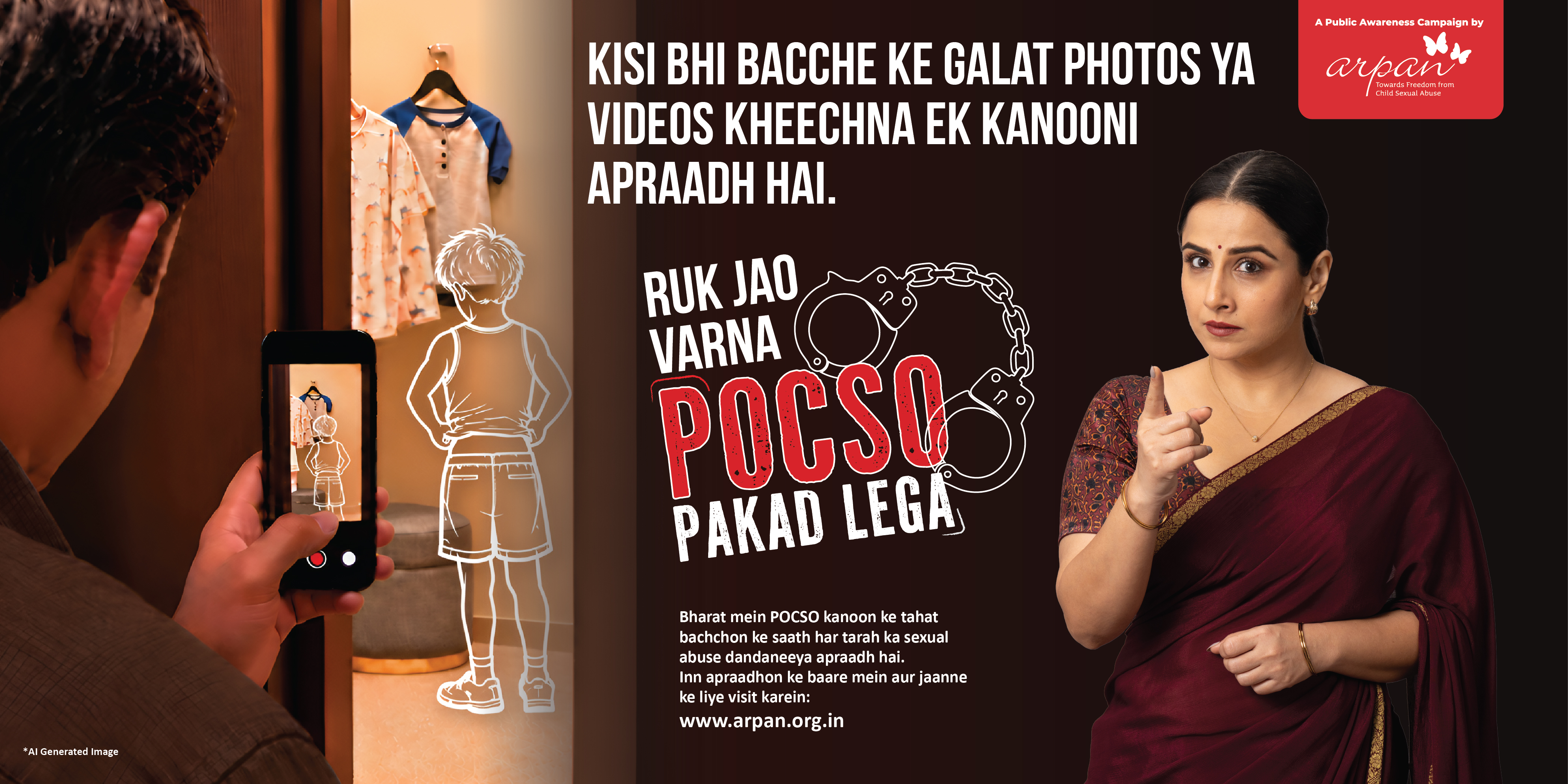
Taking inappropriate photos or videos of a child is punishable under Section 13; seeing, saving or sharing inappropriate photos or videos of a child are actions that are punishable under Section 14 & 15 of the POCSO Act (Child Sexual Exploitative Abuse Material). In 2024, 500 total cases were registered under this section.
In addition, cases of publishing or transmitting material depicting children in sexually explicit acts were also registered under the IT Act (Section 67B) and accounted for 89% of the total cybercrime cases.
Note: This is the total number of cases filed under Section 13, not only these situations.
Source: National Crime Records Bureau (2024)
What Is Child Safety Week?
Observed annually from 14–20 November, Child Safety Week (CSW) is a nationwide collaborative movement that amplifies conversations, drives action, and mobilises communities to prevent children from sexual abuse.
📅 Why Is Child Safety Week Held From 14 to 20 November?
📢 What Does “Ruk Jao, Varna POCSO Pakad Lega” Mean?
It means “Stop, or else POCSO will catch you”. The 2026 campaign highlights six situations that often go unnoticed because many of us don’t recognise them as abuse. Each one is a crime under the Protection of Children from Sexual Offences (POCSO) Act. Every offender needs to know it and stop, or the law will catch them. The situations are:
Share the Child Safety Week 2026 Campaign Creatives
Now that you know the law, help spread awareness of the POCSO Act. Each creative shows a real-life situation and an act that is considered Child Sexual Abuse and is a crime under the POCSO Act. Preview or share it on WhatsApp, Instagram, Facebook or LinkedIn with a click.

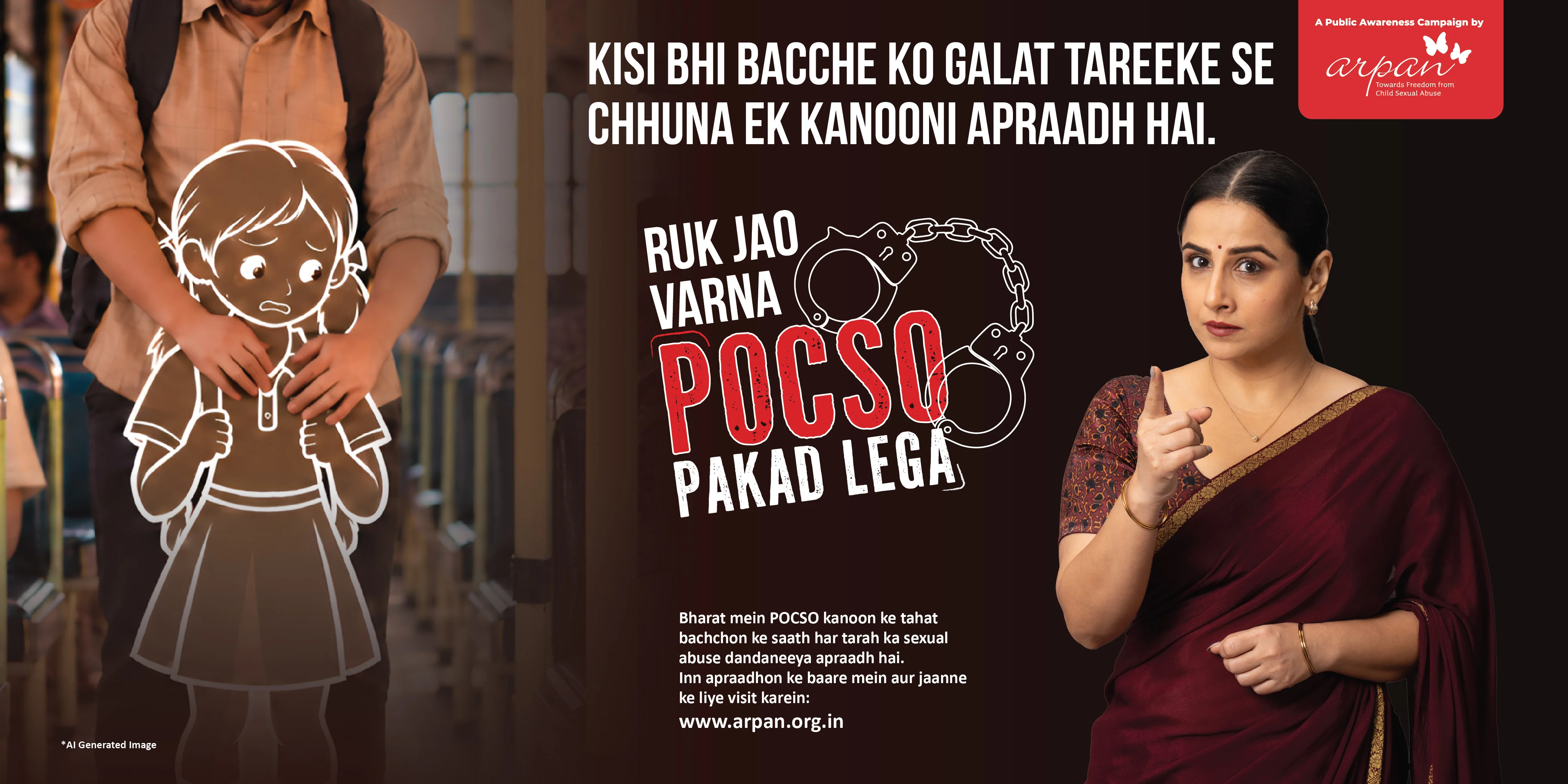
Touching a child inappropriately
Kisi bhi bacche ko galat tareeke se chhuna ek kanooni apraadh hai.
🔴 2026 Campaign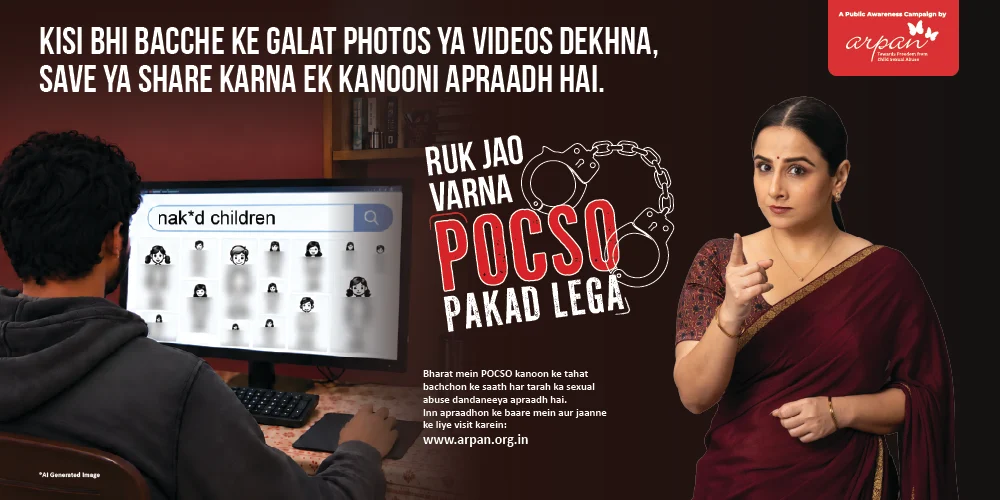
Watch the Child Safety Week 2026 Campaign Films
A short film warning the offenders; these six acts are considered child sexual abuse, and each one of them is punishable under the Protection of Children from Sexual Offences (POCSO) Act.
POCSO Act Awareness Quiz: Three Questions for Every Adult
One minute, no sign-up. See how much of this guide you remember.
How to Report Child Sexual Abuse in India
If a child tells you about abuse, or you suspect it, you can act. Under Section 19 of the POCSO Act, any adult who knows that an offence has been committed is required to report it to the police or the Special Juvenile Police Unit. You do not need proof to report a concern. However, false reporting under the POCSO Act, when done knowingly, can result in legal consequences.

01. Notice
Notice the signs: a sudden change in behaviour, becoming secretive, unexplained gifts or messages. Even when they come from someone the child knows and trusts.

02. Believe
Listen calmly and believe the child. Tell them, “It is not your fault.”

03. Report
Contact Childline, the POCSO e-box or National Cyber Crime Reporting Portal (for online sexual abuse). Keep the child’s identity private.
Official Helplines and Complaint Channels
Free 24x7 helpline for children who need care and protection.
Call 1098 ▾Online complaint system of the National Commission for Protection of Child Rights (NCPCR).
Report online ▾National Cyber Crime Reporting Portal
Call 1930 for immediate help. Report online safely and securely.
Child Safety Week Toolkit: POCSO Campaign Awareness Posters, Creatives and Captions
Run Child Safety Week at your school, NGO, housing society or workplace with ready-to-use campaign material.
Scripts Tool Kit
Simple scripts are provided to lend your voice to our campaign; share on your social media and tag us!
View the scripts
Read More About the Child Safety Week Campaigns,
POCSO Act on the Arpan Blogs
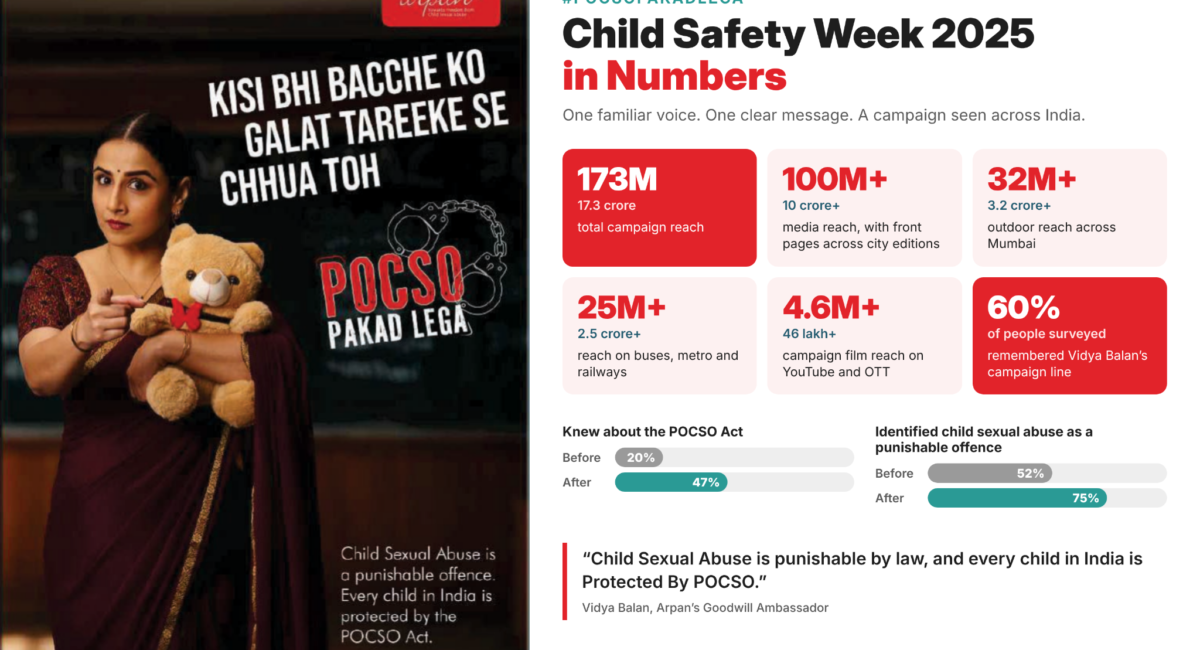
When Vidya Balan Speaks, India Listens: The Power of Public Voices in Child Safety
Read the blog ↗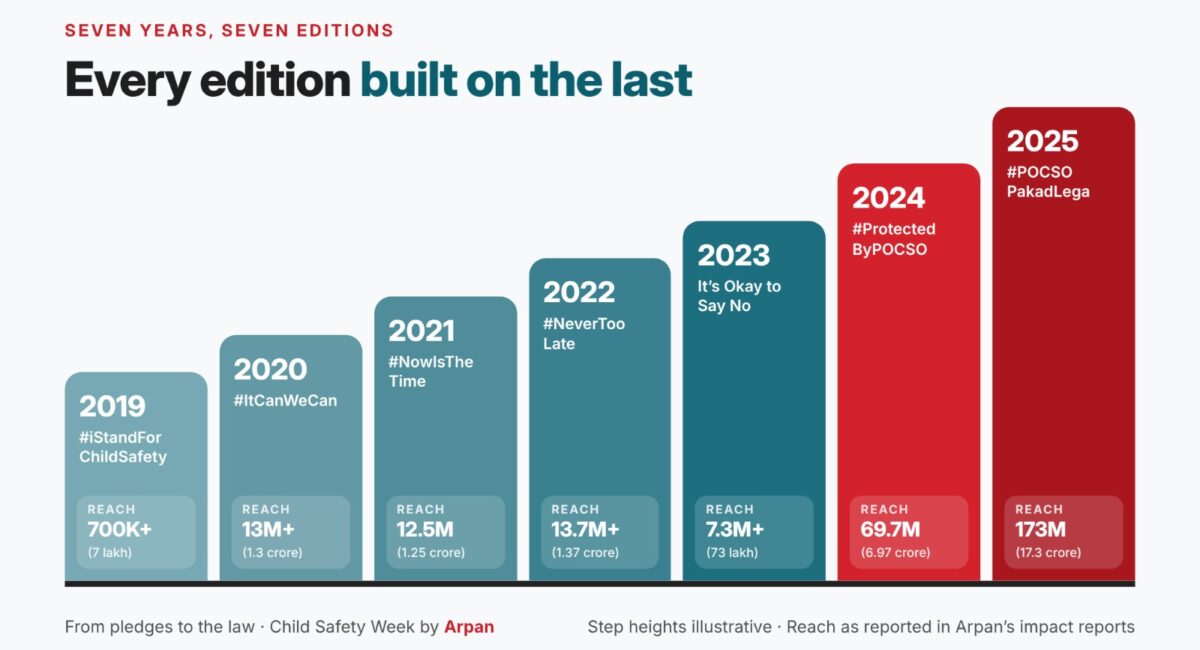
From Pledges to #ProtectedByPOCSO, Seven Years of Child Safety Week in India
Read the blog ↗
POCSO at Thirteen: What We Must Strengthen to Truly Protect Children
Read the blog ↗Child Safety Week and POCSO Act: FAQs
01What is Child Safety Week?
Observed annually from 14–20 November, Child Safety Week (CSW) is a nationwide collaborative movement that amplifies conversations, drives action, and mobilises communities to prevent children from sexual abuse.
02What is POCSO?
POCSO stands for the Protection of Children from Sexual Offences. It is a gender-neutral law passed by the Government of India in 2012 (amended in 2019) to support children with lived experiences of Child Sexual Abuse (CSA), either online or offline.
03Who does POCSO protect?
It protects all children under the age of 18, irrespective of their gender.
04What are the punishments under the POCSO Act?
Legal punishments vary for different sexual offences. For example, if it is penetrative sexual assault, then it is imprisonment of 10 years to life, plus fine. To know more about the POCSO Act punishments, click here.
05What is Ruk Jao Varna POCSO Pakad Lega?
“Ruk Jao Varna POCSO Pakad Lega” means “Stop, or else the law will catch you.” It is the central theme of Arpan’s Child Safety Week 2026 campaign, which directly warns offenders about the different actions and behaviours that constitute Child Sexual Abuse and are punishable under the POCSO Act. Click here to share campaign messages.
06How can I support the Child Safety Week campaign?
Share a campaign creative on WhatsApp, Instagram, Facebook or LinkedIn, take a quick quiz, and use the toolkit to share the campaign at your school, NGO or workplace.
07How do I report CSA cases in India?
If you come across any child who has faced CSA, you can do the following:
- Call Childline on 1098 (free 24x7 helpline for children who need care and protection).
- File an online complaint by visiting the POCSO e-box (by the National Commission for Protection of Child Rights, Govt. of India).
- File complaints about online sexual abuse: call 1930 or visit the National Cyber Crime Reporting Portal.